

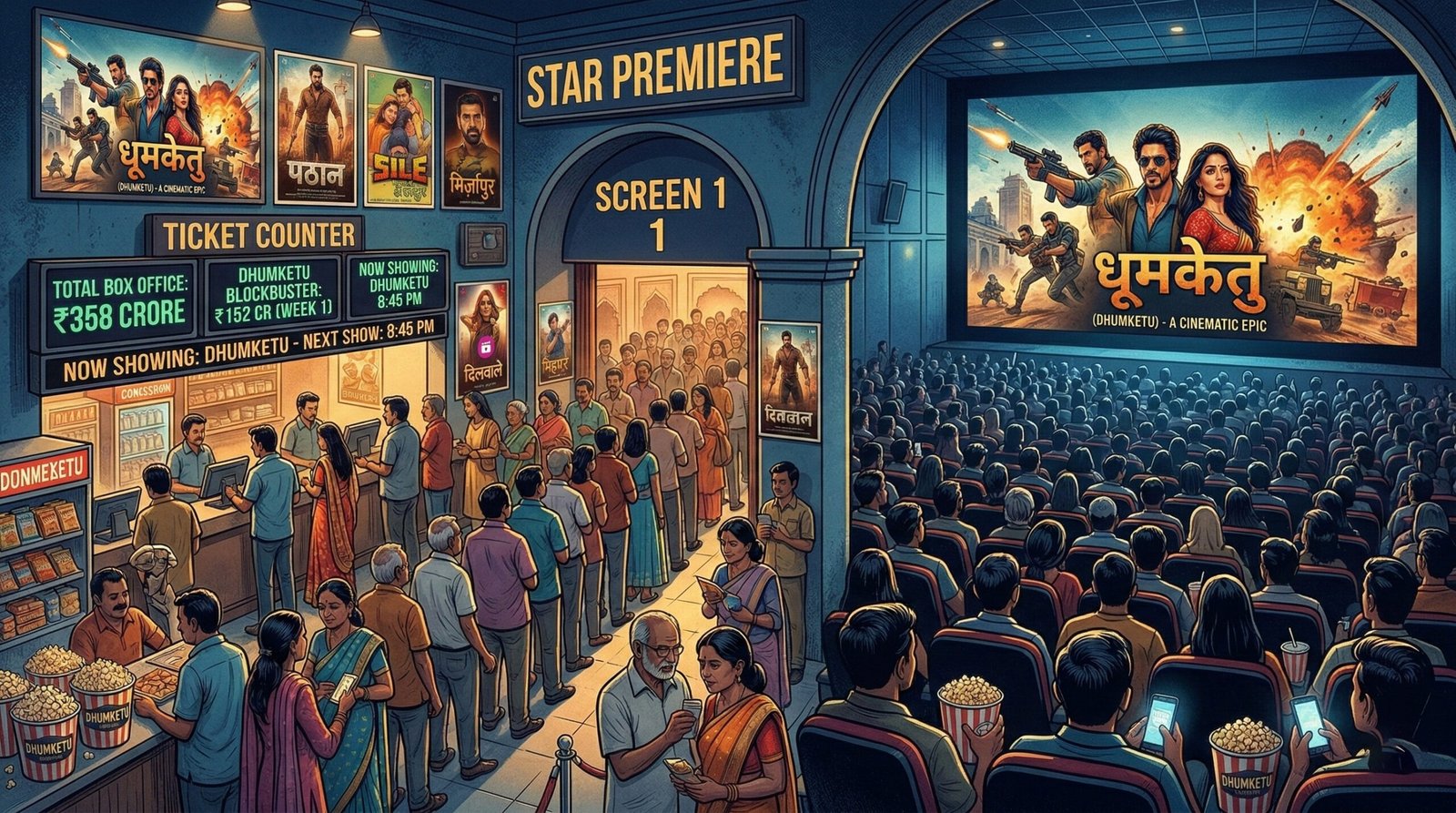
When a big Bollywood film releases, most people judge its success only by the box office numbers. Headlines usually focus on opening day collections, weekend totals, and whether a movie crossed the 100 crore or 500 crore mark. But the reality is that the box office is only one part of how a film earns money.
Modern Bollywood films generate revenue from several different sources. In many cases, producers recover a large portion of the budget even before the film reaches theatres. This happens through deals involving OTT streaming rights, satellite TV rights, music rights and overseas distribution.
Understanding these revenue streams helps explain why some films are considered financially successful even when their theatrical performance is average.
Theatrical Box Office Revenue
Theatrical box office is the most visible source of revenue for any film. When audiences purchase tickets in cinemas, the revenue is shared between theatre owners, distributors and producers.
In India, the revenue-sharing model generally works like this:
Week 1
Producers and distributors receive roughly 50–55 per cent of ticket sales.
Week 2 onwards
The theatre share increases, and the producer’s percentage gradually decreases.
For example, if a movie collects ₹200 crore at the Indian box office, producers do not receive the full amount. After theatre shares and distribution cuts, the producer’s portion may be closer to ₹90–110 crore, depending on agreements.
That is why box office numbers alone do not always represent the actual profit of a film.
Overseas Box Office Earnings
Bollywood films also generate significant revenue from international markets. Countries such as the United Arab Emirates, the United States, the United Kingdom, Canada and Australia have strong audiences for Hindi cinema.
Producers usually sell overseas distribution rights to international distributors before the film’s release. These distributors handle marketing, theatre bookings and local promotions in those regions.
For films starring major actors like Shah Rukh Khan, Salman Khan or Ranbir Kapoor, overseas earnings can form a substantial part of the overall revenue.
In some cases, overseas rights alone are sold for tens or even hundreds of crores, depending on the film’s scale and global appeal.
OTT Streaming Rights
In the last few years, OTT platforms have become one of the biggest revenue sources for Bollywood films.
Streaming platforms such as Netflix, Amazon Prime Video and Disney+ Hotstar purchase digital streaming rights, allowing them to premiere the movie on their service after its theatrical run.
For many big-budget films, OTT deals are finalised even before the movie releases in cinemas.
The price of OTT rights depends on several factors:
• star power of the actors
• reputation of the director
• scale of production
• pre-release buzz
• genre and audience appeal
Large Bollywood films sometimes sell OTT rights for ₹80–150 crore or even more. This means producers can recover a significant portion of the production budget before the film reaches theatres.

Satellite Television Rights
Satellite rights refer to the television broadcast rights of a film. These rights allow TV networks to premiere the movie on television after its theatrical and digital release.
Major television networks purchase these rights to attract viewers during festival premieres and special movie broadcasts.
For example, popular Hindi movie channels often pay substantial amounts for blockbuster films because TV premieres bring high TRP ratings and advertising revenue.
Satellite rights for large Bollywood films can range from ₹30 crore to ₹80 crore, depending on the popularity of the cast and the scale of the project.
Music Rights
Music has always been a major part of Bollywood cinema, and songs can generate significant revenue through music rights.
Music companies such as T-Series, Sony Music India and Zee Music Company often buy the audio rights of a film’s soundtrack. Once purchased, the label distributes the songs across streaming platforms, YouTube, radio and music apps.
Revenue is generated through several channels:
• music streaming platforms
• YouTube views
• ringtone downloads
• brand collaborations and promotions
For films with highly anticipated soundtracks, music rights alone can be sold for several crores.
Brand Promotions and Product Placement
Many Bollywood films also earn money through brand partnerships.
Companies often collaborate with filmmakers to promote their products inside the film or through the movie’s marketing campaign. This strategy is known as product placement or brand integration.
For example, a character in a film might use a specific smartphone brand, wear clothing from a particular label or drive a certain car model.
Brands pay large fees for this exposure because blockbuster films reach millions of viewers. In addition, brands frequently partner with actors for promotional campaigns tied to the movie’s release.

Digital and Ancillary Rights
Apart from the major revenue streams, films also earn money through several smaller rights.
These may include:
• airline entertainment rights
• international television rights
• remake rights
• merchandising and licensing
Although these sources generate smaller revenue compared to theatrical or OTT deals, they still contribute to the overall profitability of a film.
Why Pre-Release Business Matters
Today many Bollywood producers try to recover most of the production cost before the theatrical release.
By selling OTT, satellite, music and distribution rights in advance, filmmakers reduce financial risk. If the film performs well in theatres, the box office earnings become additional profit.
This strategy is especially common for large-scale films where production budgets can reach hundreds of crores.
Conclusion
Bollywood movies do not rely only on box office collections. The modern film business involves multiple revenue streams including theatrical earnings, OTT streaming deals, satellite television rights, music rights and brand partnerships.
Because of these different income sources, a film can still be financially successful even if its theatrical performance is moderate.
Understanding how these revenue channels work offers a clearer picture of the business side of Bollywood and explains why a movie’s success is measured in more ways than just box office numbers.