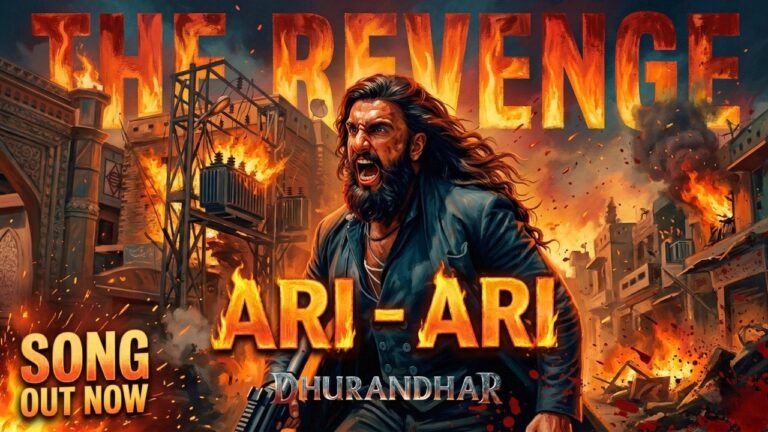
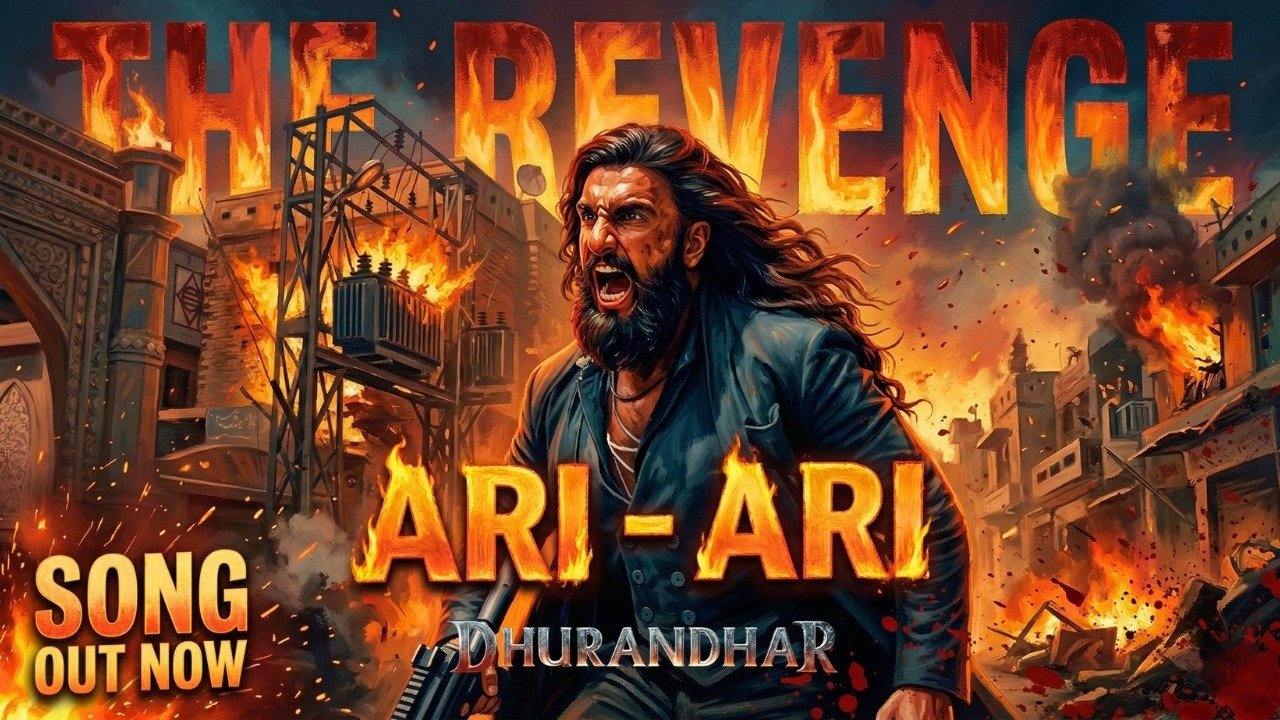
The Internet is abuzz with the trailer of Dhurandhar: The Revenge, but there is a big highlight that has steal the show. Along with explosive action and intense visuals, the revival of the iconic track “Ari Ari” has stirred nostalgia for fans while introducing the classic Punjabi chant to younger generations.
Dhurandhar 2 trailer creates buzz with nostalgic music
Since the release of the trailer for Dhurandhar: The Revenge, it has been a trending topic across all social media platforms. Starring Ranveer Singh in one of his most insane avatars ever, this film is expected to be an edgy, high-stakes drama featuring a ton of action.
The trailer illustrates grim visuals, hard-hitting confrontations and big battle moments. But amid the shooting and tension, it is the background music that has inadvertently become a major talking point.
The first few notes heard at the start of the trailer, chanting in an a cappella style “Ari Ari…”, fill many viewers with instant nostalgia. For millennials in particular, the track recalls early 2000s parties and weddings and college festivals where the song was practically omnipresent.
Fitting for this moment in time, the resurfacing of the track has led to a flurry of nostalgic posts online as fans reminisce about listening to it in its heyday around 2000s Punjabi pop music.
The most widely-known version of “Ari Ari” became popularised by the Danish-Indian music group Bombay Rockers.
The group formed in 2003 when singer Navtej Singh Rehal, who was based in Denmark at the time, started working with producers Thomas Sardorf and Janus Barnewitz. Their musical chemistry during several jam sessions eventually led to the formation of the band.
At a time when fusion music was still evolving globally, Bombay Rockers introduced a distinctive sound that blended Punjabi vocals with English lyrics and electronic dance beats.
This unique mix quickly made them popular across India, Europe and the Punjabi diaspora worldwide.
The band released several tracks that became massive hits in the early 2000s. Songs like Rock Tha Party, Nava Nava and Ishq became regular features at parties and dance floors.
Among these songs, Ari Ari stood out as one of their most memorable tracks. Its catchy rhythm and energetic chant turned it into a dancefloor favorite for years.
The group’s last widely recognised release was Let’s Dance in 2011. Nearly two decades later, the song has found a new life through its use in Dhurandhar: The Revenge.
Although Bombay Rockers popularized Ari Ari as a modern pop hit, the chant itself comes from a much older Punjabi folk tradition.
The phrase originates from the well-known Punjabi folk refrain “Baari Barsi.” This refrain belongs to a traditional poetic style known as boliyan.
Boliyan are short, lively couplets typically sung during celebrations such as weddings, harvest festivals and cultural gatherings. They are often performed in a call-and-response style while dancers perform bhangra or giddha to the rhythm of the dhol.
Kamal Haasan Reportedly Becomes India’s Highest-Paid Actor with Massive Fee for Kalki 2898 AD
A typical boli often begins with the line “Baari barsi khattan gaya si.”
The phrase loosely describes someone leaving home to work for many years before returning. Historically, it reflected the experiences of many Punjabi families where men travelled far away for labour or trade to support their households.
Since these verses were traditionally passed down orally rather than written down, historians believe the boliyan tradition likely developed between the 15th and 17th centuries.
By the 19th and early 20th centuries, these folk verses had become a central part of Punjabi celebrations and community gatherings.
A full-circle moment in Ranveer Singh’s career
Interestingly, the Baari Barsi folk refrain has appeared in Ranveer Singh’s career before.
A version of the song appeared in his debut film Band Baaja Baaraat, where it was used during a lively wedding sequence. The track perfectly matched the festive atmosphere of the film.
Now, years later, the same folk-inspired chant returns in a completely different setting. Instead of a joyful wedding scene, it now plays over dark action sequences and espionage drama in Dhurandhar: The Revenge.
This contrast creates an interesting full-circle moment in Ranveer Singh’s filmography.
The franchise’s connection with iconic Punjabi tracks
This is not the first time the Dhurandhar franchise has used a Punjabi classic to generate buzz.
In the first film Dhurandhar, the song Na De Dil Pardesi Nu became a major highlight after its release.
Similar to Ari Ari, the track was a modern reinterpretation of a well-known Punjabi folk song.
The original version of Na De Dil Pardesi Nu was sung by Punjabi folk artists Mohammad Sadiq and Ranjit Kaur during the mid-1990s. The track later gained international recognition when it was remixed by Punjabi MC in 2003.
The film’s reinterpretation once again brought the classic track back into mainstream attention.
About Dhurandhar: The Revenge
Directed by Aditya Dhar, Dhurandhar: The Revenge continues the story after the dramatic ending of the first film.
The movie features a strong ensemble cast including Sara Ali Khan, Sanjay Dutt, R. Madhavan and Arjun Rampal alongside Ranveer Singh.
The sequel explores the rise of Hamza Ali Mazari in Pakistan’s Lyari town and his pursuit of Major Iqbal, expanding the espionage storyline introduced in the first film.
With its mix of intense action, political intrigue and nostalgic musical elements, the film is shaping up to be one of the most talked-about action releases of the year.
And judging by the reaction to the Ari Ari track alone, Dhurandhar: The Revenge is already striking a strong chord with audiences.