
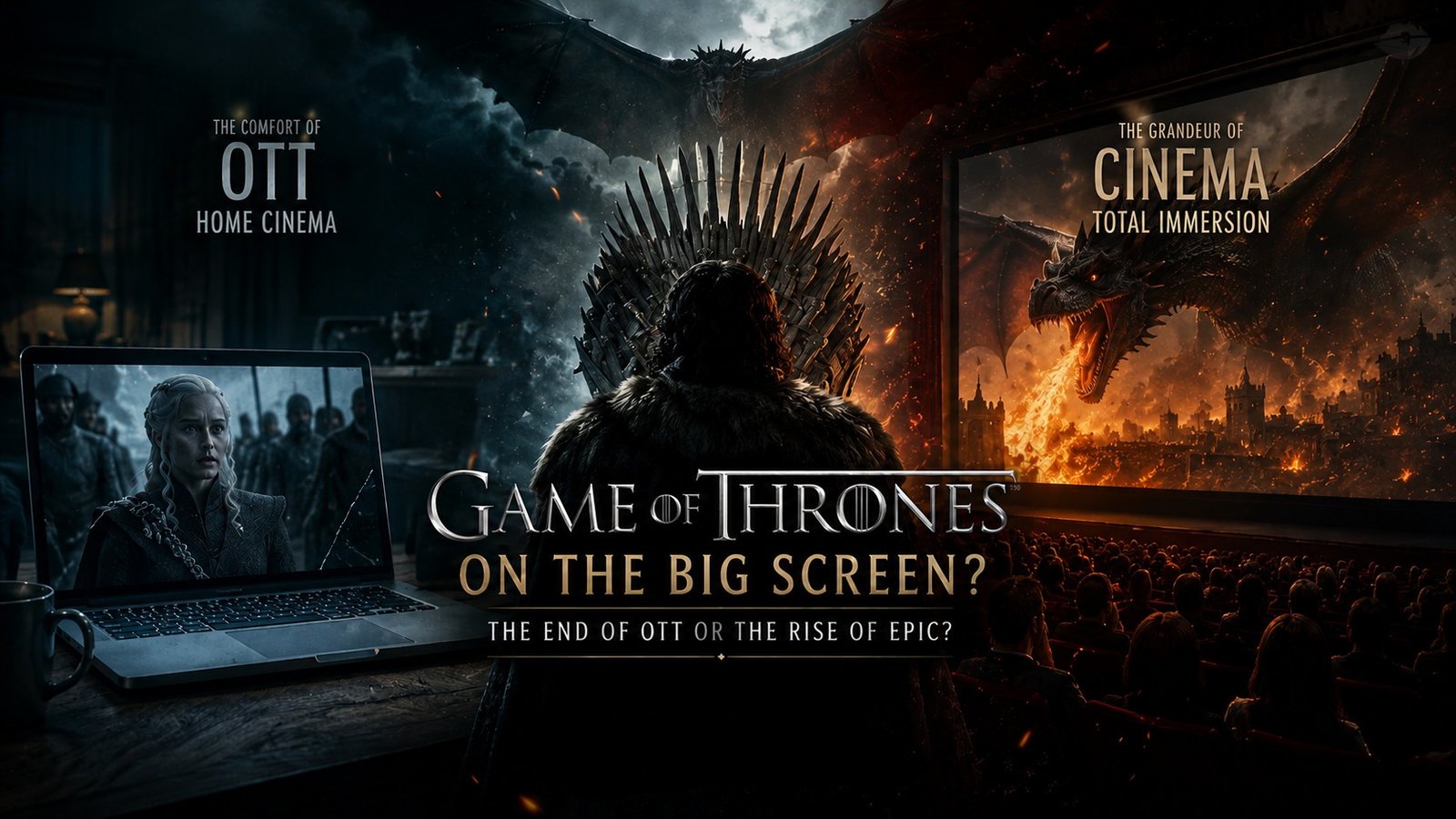
The era of watching dragons on a 13-inch laptop screen might finally be coming to an end. As whispers of a Game of Thrones theatrical movie gain momentum, fans are standing at a crossroads. Will the shift from the comfort of OTT platforms to the grandeur of the big screen redefine the legacy of Westeros, or is some magic lost when the binge-watch ends?
The Evolution of Epic Storytelling
For nearly a decade, Game of Thrones was the undisputed king of the “Golden Age of Television.” It was the show that turned Sunday nights into global events, fueled by the convenience of streaming and the intimacy of home viewing. However, the landscape of entertainment is shifting. The transition from an Over-The-Top (OTT) series to a full-scale theatrical motion picture marks a massive pivot in how we consume high-fantasy sagas.
While streaming offered the luxury of pausing, rewinding, and theorizing in real-time on social media, the theater offers something streaming never could: total immersion. Moving away from the serialized weekly format into a self-contained cinematic experience is a bold gamble by the creators, aiming to capture the sheer scale of George R.R. Martin’s world in a way that your living room speakers simply cannot replicate.
Laptop Glare vs. The Glow of the Silver Screen
There is a fundamental difference between watching a battle sequence on a personal device and witnessing it in a darkened hall. For years, many fans experienced the Battle of the Bastards or the Siege of Winterfell on laptops, tablets, or mid-sized televisions. While the narrative remained compelling, the technical limitations were often glaring—literally. Issues with compression, dark cinematography (who could forget the “The Long Night” brightness controversy?), and tiny built-in speakers often stripped away the layers of detail the production team worked so hard to create.
Enter the IMAX experience. Imagine the shadow of Drogon passing over King’s Landing, not as a flickering image on a screen you can cover with your hand, but as a towering, earth-shaking presence. The theatrical format allows for a level of visual fidelity and sound design that demands the viewer’s undivided attention. In a cinema, you aren’t checking your phone or getting up for a snack; you are transported to the Seven Kingdoms. The scale of the Wall, the intricate costumes, and the sweeping vistas of the North are built for the 70mm canvas.
The Loss of the “Binge” Culture?
However, this transition isn’t without its detractors. Part of the Game of Thrones charm was the slow burn—the ability to live with these characters for ten hours a season. A movie, by its very nature, must be more concise. It trades the depth of a multi-episode arc for the intensity of a three-hour spectacle.
For the “OTT generation,” the comfort of the “Home Cinema” is hard to beat. There is a certain ritualistic joy in watching a series at your own pace, draped in a blanket with a laptop on your knees. The digital age made Westeros accessible to everyone, everywhere. Moving the finale or a new chapter of this story behind a theater ticket wall changes the democratic nature of the fandom.
A New Chapter for the Franchise
This move reflects a broader trend in Hollywood where “Prestige TV” is beginning to merge with the “Blockbuster Movie.” If the rumors hold true, the Game of Thrones movie won’t just be a longer episode; it will be a structural reimagining. The focus will likely shift from sprawling, interconnected subplots to a more focused, high-stakes narrative suitable for a global theatrical audience.
The question of “quality” vs. “convenience” is at the heart of this debate. Does the story of the Iron Throne require the specialized optics of a theater to be truly appreciated? Or was the magic always about the community created by millions of people streaming the same show simultaneously from their bedrooms?
The Audience Verdict: Cinema or Sofa?
As we look toward the future of the franchise, the ball is in the audience’s court. We have seen the rise of the “Event Movie” once again, with audiences proving they are willing to leave their couches for something that feels truly “big.”
Is the world of Ice and Fire big enough for the big screen? Or should it remain in the digital realm where it first conquered the world? Whether you prefer the crisp, towering heights of an IMAX projection or the cozy, familiar glow of your laptop, one thing is certain: the battle for the soul of Westeros is moving to a new front.