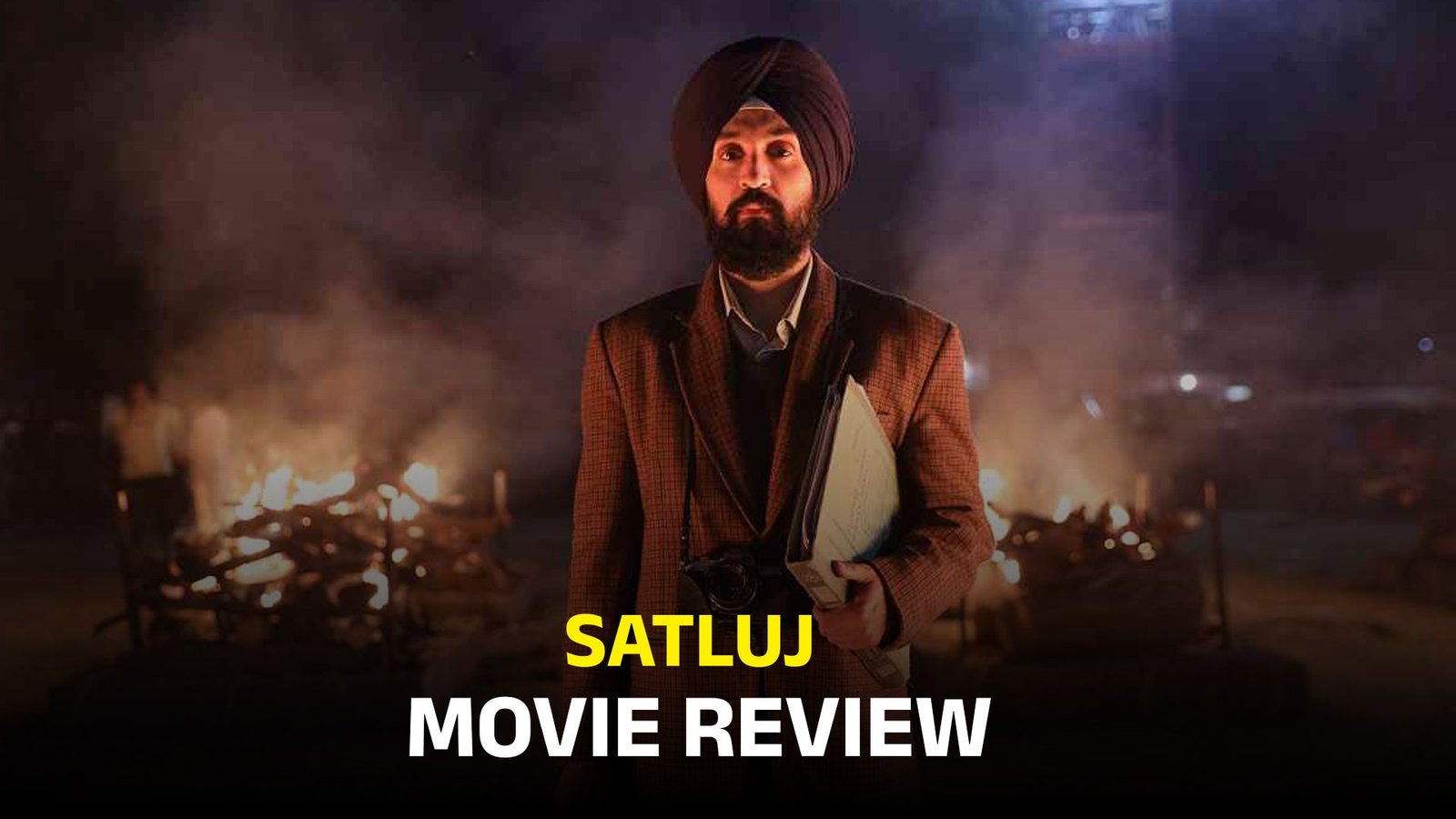
Honey Trehan’s Satluj is not an easy film to watch, nor does it attempt to be. Inspired by the life of human rights activist Jaswant Singh Khalra, the film revisits one of Punjab’s darkest chapters with remarkable restraint and emotional honesty. Led by a phenomenal Diljit Dosanjh, Satluj is less interested in delivering a conventional political thriller and more focused on documenting the human cost of injustice.
Story
Satluj draws inspiration from the true story of human rights activist Jaswant Singh Khalra and explores the allegations of illegal detentions, fake encounters, and secret cremations that haunted Punjab during the mid-1990s.
The story follows Jaswant Singh (Diljit Dosanjh), an ordinary bank employee living a quiet life with his family. His world changes when he begins searching for the missing mother of a close friend who was killed in a police encounter.
What initially appears to be a single disappearance gradually uncovers a disturbing pattern of unidentified bodies being cremated as “unclaimed” without their families ever being informed.
As Jaswant collects official records and speaks to grieving families, he realizes the scale of the alleged cover-up is far greater than he imagined.
Every step toward the truth puts his own life and family at greater risk as influential police officers and political figures attempt to silence him.
Following Jaswant’s sudden disappearance, the narrative shifts toward a CBI investigation attempting to uncover the truth behind the activist’s fate.
Rather than functioning as a mystery alone, Satluj becomes a deeply emotional story about courage, accountability, and the cost of standing up against systemic injustice.
Performances
Diljit Dosanjh delivers the finest performance of his career.
He portrays Jaswant Singh with remarkable restraint, never turning him into a cinematic superhero. Instead, he gradually transforms an ordinary man into someone driven by quiet courage and unwavering conviction.
One of the film’s most powerful moments arrives as Jaswant silently studies cremation records and slowly realizes the horrifying scale of the disappearances. Without dramatic dialogue or emotional outbursts, Diljit conveys disbelief, fear, and determination purely through subtle expressions.
Geetika Vidya Ohlyan is exceptional as Paramjit.
She avoids melodrama completely, portraying a woman whose quiet resilience becomes one of the film’s emotional anchors. Whether standing beside her husband despite growing danger or searching for answers after his disappearance, she delivers a deeply affecting performance.
Suvinder Vicky is terrifying as SSP Sugga.
Rather than relying on loud intimidation, he creates constant tension through calm smiles, prolonged eye contact, and unsettling silence. His performance becomes one of the film’s strongest sources of psychological fear.
Arjun Rampal brings dignity and composure as CBI officer Samudra Singh.
His understated performance provides a welcome contrast to the hostility surrounding the investigation, although the screenplay gives him comparatively less emotional depth.
Saurabh Sachdeva is excellent as Satnam, portraying a conflicted policeman trapped between his conscience and the system he serves.
Kanwaljit Singh is equally effective as the politically influential Bitta, presenting manipulation beneath an outwardly composed personality.
Analysis
Honey Trehan approaches Satluj with remarkable maturity.
Rather than sensationalizing an already tragic chapter of history, he constructs the narrative like an investigation, allowing every horrifying revelation to emerge organically through documents, testimonies, and persistent inquiry.
That decision becomes the film’s greatest strength.
Instead of portraying institutional violence through graphic imagery, Satluj exposes something far more disturbing: how routine brutality becomes within systems protected by power.
Disappearances, fake encounters, and illegal cremations are discussed with chilling administrative normalcy, making the horror feel even more authentic.
The screenplay carefully balances the political with the personal.
Jaswant’s relationship with his family ensures that every threat carries genuine emotional weight. His activism never feels detached from his personal life, making every decision increasingly heartbreaking.
The investigation itself unfolds patiently.
Rather than relying on sudden revelations or convenient evidence, the screenplay depicts the exhausting process of documenting truth against institutions determined to erase it. That realism makes the narrative consistently engaging despite its deliberate pace.
Visually, Satluj creates an atmosphere of constant unease.
Muted colors, deserted roads, dimly lit interiors, and restrained camerawork reflect a Punjab living under fear. The production design convincingly recreates the period without drawing unnecessary attention to itself.
The film is not without shortcomings.
At nearly three hours, certain investigative passages begin repeating similar ideas about institutional resistance, causing the second act to lose momentum. Trimming around 15 to 20 minutes would have significantly improved the pacing.
The CBI investigation introduced later also shifts the film toward a more conventional procedural drama. While still effective, it lacks the emotional intensity that defines Jaswant’s personal journey.
Even so, Satluj stands among the most significant political films to emerge from Indian cinema in recent years.
Honey Trehan refuses to exploit tragedy for entertainment. Instead, he treats history with compassion, respects the real lives that inspired the story, and reminds audiences that meaningful change often begins with ordinary people refusing to remain silent.
Music And Technical Aspects
The cinematography beautifully captures Punjab through muted visuals and restrained compositions that mirror the film’s somber tone.
The production design authentically recreates mid-1990s Punjab without romanticizing the period.
The background score remains understated throughout, allowing silence and atmosphere to communicate emotion more effectively than dramatic orchestration.
The editing keeps the investigation coherent despite the lengthy runtime, although a tighter second half would have strengthened the narrative.
Sound design deserves special mention for building tension through subtle ambient details rather than relying on exaggerated effects.
Highlights
- Diljit Dosanjh’s career-best performance
- Powerful true story
- Honey Trehan’s restrained direction
- Outstanding supporting cast
- Atmospheric cinematography
- Emotionally impactful storytelling
Drawbacks
- Slow pacing in parts
- Overlong runtime
- Second-half investigation feels comparatively conventional
Final Verdict
Satluj is not a film designed for easy entertainment, but it is one that deserves to be seen. Anchored by Diljit Dosanjh’s exceptional performance and Honey Trehan’s sensitive direction, it transforms a painful chapter of history into a moving and thought-provoking cinematic experience. It may occasionally lose momentum, but its emotional honesty and powerful storytelling leave a lasting impact.